Rainbow Sheen on Deli Ham? How to Know if It’s Safe or Spoiled
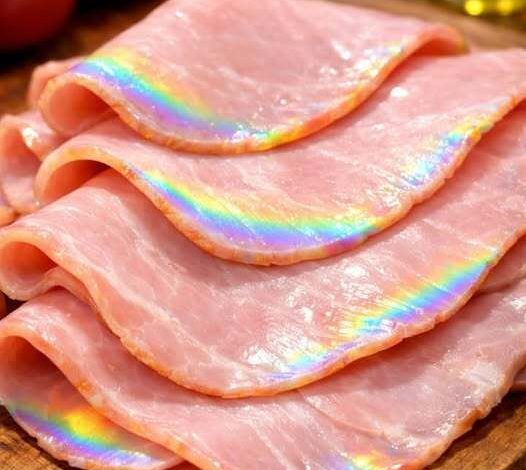
Rainbow Sheen on Deli Ham: Is It Safe or a Sign of Spoilage?
You open a newly bought package of deli ham and pause—there it is. A glossy rainbow shimmer sweeping across the slices, flashing hints of green, blue, and purple. It looks unnatural, almost alarming, and for many people it’s enough to question whether lunch should go straight into the trash.
The good news: this effect, known as iridescence, is usually harmless. Understanding why it happens—and how to spot real spoilage—can save both food and worry.
Why Ham Shimmers
That rainbow shine isn’t caused by chemicals or bacteria—it’s pure physics. Ham is made of tightly aligned muscle fibers. When the meat is sliced very thinly, especially across those fibers, the cut surface forms microscopic patterns that bend and scatter light. This diffraction splits light into different colors, much like what you see on a CD or a soap bubble.
Curing ingredients such as salt and nitrates help retain moisture on the surface, which makes the effect more noticeable. In other words, the shimmer often reflects clean slicing and proper curing—not decay.
When Looks Can Be Misleading
While iridescence itself is harmless, it doesn’t automatically mean the meat is safe. Deli meats can still spoil or carry harmful bacteria, including Listeria monocytogenes, which can grow even in cold temperatures. True spoilage comes from biological and chemical changes, not optical tricks.
How to Tell If Ham Is Still Good
- Texture: Fresh ham should feel firm and slightly damp. A slippery, sticky, or slimy surface is a red flag.
- Smell: Normal aromas are mild, salty, or smoky. Sour, sharp, or rotten-egg smells mean it’s time to toss it.
- Color: Iridescence shifts as you move the meat under light. Spoilage does not. Gray, brown discoloration or fuzzy mold spots indicate the ham has gone bad.
- Time: Even if it looks and smells fine, opened deli ham shouldn’t be kept longer than 3–5 days, according to USDA guidelines. Some bacteria grow without obvious signs.
Storing It Properly
Seal ham tightly in plastic wrap or foil, then place it in an airtight container. Keep it in the coldest part of the fridge, like the meat drawer. Good storage helps maintain quality—but it doesn’t make spoiled meat safe again.
The Takeaway
That rainbow glow on your deli ham is usually just light playing tricks on muscle fibers—not a warning of danger. Still, don’t rely on appearance alone. If the meat feels slimy, smells off, or has been sitting too long, it’s not worth the risk. Know the science, trust your senses, and enjoy your sandwich safely.