The White Cloth in Car Windows
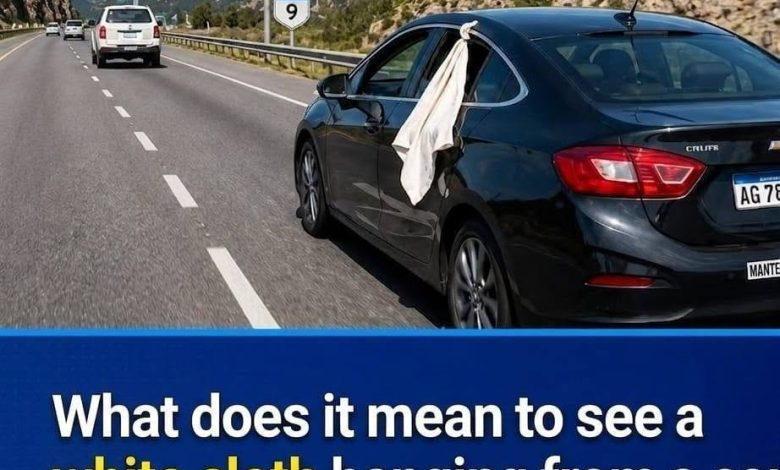
Have you ever been scrolling through social media when you suddenly come across a frightening warning about something completely ordinary? These kinds of posts appear constantly. One recent viral claim tells drivers to “lock their doors” if they notice a white towel or cloth hanging from a vehicle.
According to these rumors, a white cloth sticking out of a car window or tied around a door handle supposedly serves as a secret signal for criminals. Some versions claim it tells burglars that a home is unoccupied, while others suggest that criminals use the cloth as part of a carjacking scheme.
Before you start worrying, take a moment to relax. There is no reliable evidence that a white cloth on a vehicle is a secret criminal warning or signal.
Social media has a long history of turning innocent situations into alarming urban legends. Much like other internet myths that have circulated over the years, this story takes something ordinary and gives it a sinister explanation.
So, what are some normal reasons you might actually see a cloth hanging from a vehicle?
4 Ordinary Reasons a Cloth May Be Hanging From a Car
In most situations, there is a simple explanation. A cloth may be there because of a vehicle repair, cleaning, roadside trouble, or even the weather.
1. A Reminder From a Mechanic or Vehicle Owner
If you see a rag hanging from a car window, tucked into a door handle, or wrapped around a mirror while the vehicle is parked at home or near a repair facility, it may simply be serving as a reminder not to drive the vehicle.
The Reality: Mechanics, owners, or family members sometimes use a highly visible cloth as a makeshift warning. The vehicle could be waiting for repairs, missing a necessary component, or experiencing a mechanical problem. The cloth helps remind someone not to start or move the car before the issue has been addressed.
Once the vehicle is repaired, the person may simply forget to remove it.
2. A Towel Left Behind After Washing the Car
Cleaning a vehicle can be a surprisingly distracting job. Someone may spend time washing the windows, drying the body, or detailing the interior before moving on to other errands.
The Reality: A microfiber towel, chamois, or cleaning cloth can easily be left hanging from a window or caught in the window seal. The driver might receive a phone call, become distracted, or simply forget about it before leaving.
The towel may flap dramatically in the breeze while the vehicle is moving, but there may be nothing mysterious about it at all.
3. A Traditional Roadside Distress Signal
A white cloth can also be associated with an old-fashioned roadside distress signal. If you see a disabled vehicle stopped on the shoulder with a white cloth clearly visible, the driver may be trying to indicate that the vehicle is experiencing trouble.
The Reality: Before mobile phones became commonplace, motorists had fewer ways to communicate with passing drivers or authorities when their vehicles broke down. A visible cloth could be used to attract attention and indicate that assistance was needed.
The vehicle might have a flat tire, a dead battery, an empty fuel tank, or another mechanical problem.
Today, drivers have much better ways to request assistance, but the traditional signal may still occasionally be used.
4. Cold Weather and Winter Conditions
In colder climates, drivers sometimes keep cloths inside their vehicles for practical reasons. A small towel can be useful for wiping condensation from the windshield or helping with other winter-related tasks.
The Reality: A driver may temporarily place a cloth around a window or seal while dealing with freezing conditions. In some cases, it may simply be left there accidentally after the vehicle is cleaned or prepared for the weather.
When temperatures drop dramatically, even small practical adjustments around a vehicle can become part of someone’s routine.
Why Viral Rumors Can Cause Real Problems
Scary stories tend to spread quickly online because people are more likely to share information when they believe it could protect themselves or their families. Unfortunately, that can also turn harmless situations into reasons for unnecessary suspicion.
A person who sees a cloth hanging from a neighbor’s vehicle might immediately assume something dangerous is happening when there could be a completely ordinary explanation.
These rumors can also make people less willing to help motorists who genuinely need assistance. A stranded driver may simply be dealing with car trouble, yet someone who has seen alarming social media posts might assume the situation is a trap.
What Should You Do If You See a White Cloth?
The best approach is to consider the situation rather than automatically assuming the worst.
If the vehicle is parked in a driveway or ordinary parking area:
There is generally no reason to be alarmed. The cloth could be a forgotten cleaning towel, a repair reminder, or something else completely routine.
If the vehicle is stopped on the side of a highway:
The driver may be dealing with a breakdown or another roadside problem. If you feel safe doing so, you can contact the appropriate roadside assistance service or authorities. You should never put yourself in danger by stopping on a busy road or approaching an unfamiliar situation.
If you discover a cloth caught in your own car window:
There is no need to panic. Remove it and take it inside. It may simply be something you or someone else accidentally left there.
The Bigger Picture
It is easy to see why these stories become popular. Social media can make ordinary objects seem mysterious by attaching frightening explanations to them. Once a rumor is repeated often enough, it can begin to feel like common knowledge even when there is no solid evidence behind it.
A white cloth hanging from a vehicle does not automatically mean that a crime is taking place. In many cases, the explanation is far less dramatic: someone forgot a towel, a mechanic left a reminder, or a driver is dealing with a vehicle problem.
The next time you notice a cloth waving from a car window, there is no need to immediately assume the worst. Take a look at the circumstances, use common sense, and remember that ordinary explanations are often much more likely than viral internet stories.