Classic Comfort pot roast
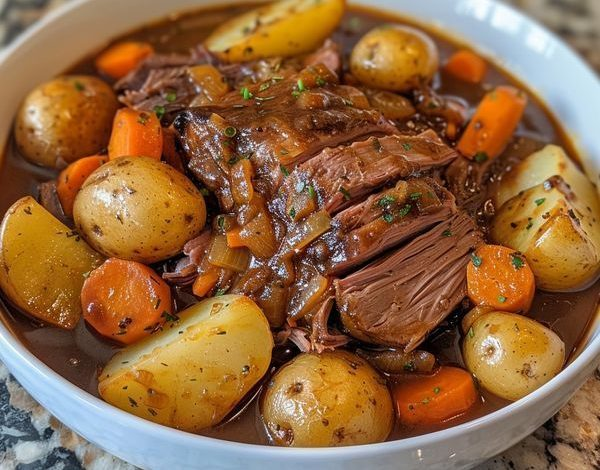
Classic Beef Pot Roast
Few meals are as comforting and timeless as a traditional beef pot roast. It’s hearty, satisfying, and made with simple ingredients that slowly come together to build deep, rich flavor. As the beef gently cooks over time, it becomes tender enough to fall apart, soaking up all the savory goodness from the broth and herbs. It’s the kind of meal that fits perfectly into a quiet weekend or a family dinner at home.
Why Slow Cooking Matters
The key to a great pot roast is low and slow cooking. This gentle heat allows the connective tissues in the beef to break down gradually, turning a tougher cut into melt-in-your-mouth meat. Meanwhile, the vegetables simmer in the broth, absorbing all the flavor and becoming just as delicious as the beef itself.
A Bit of History
Pot roast comes from long-standing European braising traditions, brought to America by immigrants and adapted into a household staple. Over time, it became known as a practical and comforting way to turn inexpensive cuts of meat into a full, nourishing meal. Today, it remains a classic centerpiece for home-cooked dinners.
Why It’s Still a Favorite
- Simple ingredients with rich, developed flavor
- Easy to customize with different vegetables and seasonings
- Perfect for cold weather or cozy family meals
Choosing the Right Cut
- Chuck roast: Well-marbled and ideal for tenderness
- Brisket: Deep, rich flavor that intensifies with slow cooking
- Round roast: Leaner, but works well with enough liquid and cooking time
Core Ingredients
- Beef roast (chuck, brisket, or round)
- Potatoes, carrots, and onions
- Optional additions like mushrooms, garlic, or parsnips
- Beef broth or stock (sometimes enhanced with wine or tomato paste)
- Herbs such as thyme, rosemary, and bay leaves, plus salt and black pepper
How to Make It
Brown the beef: Sear the roast on all sides in a hot pan to build flavor.
Build the pot: Place the beef in a heavy pot or Dutch oven, add vegetables, and pour in broth.
Slow cook: Cover and cook at a low temperature for several hours until the meat is fork-tender.
Cooking Methods
- Stovetop: Traditional and easy to control
- Oven: Even, steady heat for consistent results
- Slow cooker: Convenient, hands-off option
Vegetables and Gravy
As the pot cooks, the vegetables soften and absorb the savory broth, becoming rich and flavorful. The cooking liquid naturally turns into a gravy that can be left light or thickened depending on preference.
Serving Suggestions
Serve the beef sliced or shredded with the vegetables, generously spooning gravy over the top. It pairs beautifully with mashed potatoes, crusty bread, rice, or buttered noodles. A sprinkle of fresh herbs just before serving adds a fresh finishing touch.