The Reason for the “57” on Heinz Ketchup Bottles: A Story of Marketing Genius, Lucky Numbers, and Lasting Legacy
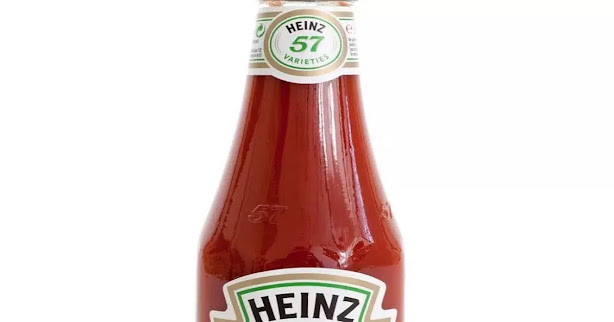
If you have ever held a classic glass bottle of Heinz ketchup, you have probably noticed the number 57 printed prominently on the label or near the neck. It is a small detail, but it has sparked curiosity for generations.
People have wondered what the number actually represents. Does Heinz make 57 different kinds of ketchup? Does the number refer to the ingredients? Was it simply chosen at random?
The real story is much more interesting. The famous 57 came from a combination of clever advertising, personal superstition, and an understanding of what makes a brand memorable. What began as a simple marketing idea eventually became one of the most recognizable symbols in the food industry.
The Train Journey That Inspired a Famous Slogan
Historical accounts, including those referenced by the Smithsonian, trace the story back to Henry J. Heinz, founder of the H.J. Heinz Company.
During a train journey in the late 1800s, Heinz noticed an advertisement promoting “21 styles” of shoes. The wording caught his attention. He realized that using a precise number made the advertisement more memorable than a general statement about having a large selection.
Heinz understood that a distinctive number could give a product personality. It did not necessarily have to represent an exact measurement or inventory count. What mattered was that customers remembered it.
With that idea in mind, Heinz decided that his own company needed a memorable number—something that could suggest variety, quality, and reliability while giving the brand a recognizable identity.
That number eventually became 57.
Why Heinz Chose the Number 57
The choice of 57 was not completely random.
According to the long-standing Heinz story, 5 was Henry Heinz’s lucky number, while 7 was the lucky number of his wife, Sarah Heinz. Combining the two created 57.
The number was short, easy to remember, and sounded distinctive when spoken. More importantly, it had personal meaning for Heinz.
There is another important detail: the number was never intended to represent the actual number of products Heinz sold.
When Heinz began promoting “57 Varieties” in 1896, the company was already producing more than 57 products. Its offerings included pickles, sauces, vinegars, and other food products.
So, from the beginning, 57 was primarily a marketing device, not an inventory figure.
How “57 Varieties” Became a Branding Powerhouse
Once Heinz settled on the number, the company made it a central part of its identity.
The famous “57 Varieties” slogan appeared prominently in advertising and on packaging. Repeating the number over and over helped consumers associate it immediately with Heinz.
The strategy was remarkably effective. Instead of simply being a number printed on a bottle, 57 became a symbol of the company itself.
The slogan also gave shoppers the impression that Heinz offered an enormous range of choices. It suggested abundance without requiring customers to know exactly what the 57 varieties were.
Over time, the number became so closely associated with Heinz that the brand hardly needed to explain it. Seeing “57” was often enough for consumers to recognize the company.
What About Tapping the Bottle?
Another famous Heinz tradition involves getting ketchup out of the old glass bottle.
A popular belief says that tapping the number 57 is the secret to making ketchup flow. However, that isn’t really how the bottle works.
The better-known explanation is to tap the neck of the bottle, rather than the area marked 57. The narrower glass section can help create vibrations that encourage the thick ketchup to move.
The idea that the 57 itself has special powers is more legend than science. Still, the association became part of the Heinz experience.
And from a marketing perspective, that wasn’t necessarily a bad thing.
The bottle encouraged customers to interact with the product. People developed their own techniques for getting the ketchup out, creating a small ritual that became familiar across generations.
Separating the Facts From the Myths
Because the number has appeared on Heinz products for well over a century, plenty of explanations have developed around it.
One common belief is that Heinz produces exactly 57 products. That’s incorrect. The company had already surpassed that number when the slogan was introduced.
Another theory claims that 57 represents the number of ingredients in Heinz ketchup. It doesn’t. The number has nothing to do with the ketchup’s recipe.
There is also a theory that Heinz’s 57th product was responsible for the number. There is no solid historical evidence supporting that explanation.
Some people even assume that Heinz produces 57 different types of ketchup. Again, the number was never intended to describe the number of ketchup varieties.
The explanation most closely associated with Heinz’s own history is much simpler: 5 and 7 were considered lucky numbers by Henry and Sarah Heinz, and the combination became 57.
The number was then incorporated into the “57 Varieties” marketing campaign.
Why the Number Worked So Well
The success of 57 wasn’t just about luck. It was also a clever lesson in branding.
A specific number can feel more believable and memorable than a vague claim. “57 Varieties” sounds more distinctive than simply saying “many varieties.”
Then there was repetition. Customers encountered the same number on bottles, advertisements, signs, and other promotional materials. Over time, that repeated exposure strengthened the connection between 57 and Heinz.
The story behind the number also gave it personality. Rather than being an arbitrary corporate symbol, it was connected to the personal beliefs of the company’s founder and his family.
There was also an element of mystery. People wondered what 57 meant, and that curiosity encouraged conversations about the brand.
Most importantly, Heinz kept the number consistent. Generations of consumers saw the same symbol, turning it into a familiar part of the company’s identity.
The Cultural Impact of 57
More than a century later, the number remains one of the most recognizable elements associated with Heinz.
For many people, seeing 57 on a glass ketchup bottle can immediately bring back memories of family dinners, picnics, cookouts, and childhood meals.
It has become a form of brand shorthand. Heinz doesn’t always need to spell out its name for the number to be recognizable.
The symbol also works internationally because numbers are not tied to a particular language. Although Heinz has adapted some packaging and slogans for different markets, the iconic 57 has remained an important part of its visual identity.
From a Small Food Company to a Global Brand
The growth of Heinz makes the longevity of 57 even more remarkable.
When the slogan was introduced in 1896, the company was already producing more than 60 different food products, including pickles, sauces, vinegars, and condiments. Its operations were primarily focused on the American market, with a much smaller workforce and revenue than the company has today.
Modern Heinz operates as part of The Kraft Heinz Company, a global food business with hundreds of products sold around the world.
The company’s portfolio now extends far beyond the products available during Henry Heinz’s time, reaching consumers in countries across the globe.
Yet one thing has remained remarkably consistent: 57.
The company changed. Its products expanded. Its markets grew. Its workforce multiplied. Its business became global.
But that little number stayed on the bottle.
And that’s perhaps the most impressive part of the story. Henry Heinz chose 57 because it was memorable, personal, and useful for advertising. More than 125 years later, the number has become far more than a marketing slogan—it has become a piece of food history.