A Wealthy Widower at My Nursing Home Asked Me to Marry Him — After His Funeral, His Lawyer Handed Me an Envelope and Said, “The Truth Inside May Be Hard to Process”
I was living in the state-funded wing of a nursing home when I met Arthur.
My room was small and shared.
The radiator barely worked.
The food was something you tolerated rather than enjoyed.
I lived carefully on a modest pension and had long since stopped expecting life to surprise me.
Across the courtyard, everything was different.
That was where the wealthy residents lived.
Private suites.
Better meals.
Personal doctors.
Warm rooms.
Arthur lived in the penthouse.
And somehow, that courtyard became the place where our completely different worlds collided.
I first met him beneath an old oak tree.
He was eighty-two, dressed neatly, arranging chess pieces with the seriousness of someone preparing for battle.
“You look like you understand a good game,” he said.
“I understand losing gracefully.”
He raised an eyebrow.
“That’s what poverty teaches you.”
Arthur laughed.
A warm, genuine laugh.
Then he pointed to the chair across from him.
“Sit down. I haven’t lost gracefully in years.”
We played for hours.
At some point, his private chef sent imported tea down to us.
I remember staring at my worn slippers and feeling suddenly embarrassed.
Arthur noticed.
“You keep looking at your shoes.”
“They’re old.”
“They got you here.”
He moved a pawn.
“That makes them valuable.”
I smiled.
I didn’t know then how important those afternoons would become.
Day after day, we returned to the same table beneath the oak.
We played chess.
Listened to old jazz records on Arthur’s little speaker.
Drank tea that probably cost more than I spent on groceries in a month.
And talked about our lives.
Arthur told me about his late wife.
I told him about the children I had never had.
One afternoon, I asked:
“You have three children, don’t you?”
He stared at the chessboard.
“Yes.”
“Why don’t they visit?”
His expression changed.
“They don’t care about me.”
“Arthur…”
“They’re waiting for me to die.”
I didn’t know how to respond.
“You don’t know that.”
He moved his bishop.
“I know Gregory.”
“Your oldest son?”
He nodded.
“He is patient. Polite. Calculating.”
Arthur looked toward the building.
“And he is planning something.”
I reached across the table and covered his hand with mine.
“Then today we play chess and don’t think about storms.”
He smiled faintly.
“You’re the only person in this place who wants nothing from me.”
“That isn’t true.”
He looked curious.
“I want to beat you before you die.”
Arthur laughed.
“That you’ll have to earn.”
One of his daughters, Evelyn, came to visit once.
She stood at the edge of the courtyard watching us.
Arthur waved her over.
She shook her head and left.
“That was Evelyn,” he said.
“She isn’t like Gregory. Not completely.”
“What does that mean?”
“She follows him.”
“People can change.”
Arthur sighed.
“Usually when it costs them something.”
Then he looked at me.
“Whatever happens, promise me you’ll keep playing chess with me.”
“I promise.”
That winter, Arthur’s health declined quickly.
His cough worsened.
Soon, he could barely lift the chess pieces.
One morning, I was sitting beside his bed when the door opened abruptly.
Gregory walked in.
Behind him came Evelyn and several men in expensive suits.
Lawyers.
“Father,” Gregory said, “we need to discuss your care.”
Arthur pushed himself upright.
“My care is already being handled.”
“This place is costing too much.”
Arthur’s eyes sharpened.
“My money is mine to spend.”
One of the attorneys stepped forward.
“Your family has concerns regarding your capacity to make medical decisions.”
I stared at him.
He continued.
“We intend to petition the court to appoint Gregory as your guardian and medical decision-maker.”
“He’s perfectly capable of making his own decisions,” I said.
Gregory looked at me with open contempt.
“And who are you?”
I stood.
“His friend.”
“The charity case from the state wing?”
My face burned.
“This is a family matter.”
Arthur’s voice cut through the room.
“She stays.”
Gregory turned.
“She is the only person here who visits because she wants to.”
Evelyn stood near the wall.
Silent.
Looking at the floor.
Gregory tried again.
“There is another facility upstate.”
Arthur laughed bitterly.
“Cheaper?”
“More suitable.”
“Isolated.”
Gregory’s jaw tightened.
Arthur continued.
“Somewhere nobody will notice how quickly I die?”
Even the lawyers looked uncomfortable.
Gregory leaned forward.
“If you voluntarily sign over authority, we can avoid an embarrassing court hearing.”
Arthur stared at him.
“You don’t care whether I live or die.”
His voice was calm.
“You care about what remains when I’m gone.”
No one answered.
Eventually, they left.
But the threat stayed behind.
Arthur reached for my hand.
“They’ll come back.”
“We’ll fight.”
“They’ll bring a judge.”
“Then we fight that too.”
Arthur was silent.
Then he said something I never expected.
“Marry me.”
I stared at him.
“Arthur…”
“I’m serious.”
“People will say I’m after your money.”
“Let them.”
He tightened his grip on my hand.
“If you become my wife, I can sign a healthcare directive naming you as the person who makes decisions if I can’t.”
He looked frightened.
“I don’t trust Gregory.”
I swallowed.
“You don’t have to love me,” he said softly.
“I’m asking you to protect me.”
I looked at the man who had become my closest friend.
“I already do.”
His eyes filled.
“I have since the first chess game you let me win.”
Arthur smiled.
“I never let you win.”
Then he coughed.
“You were always better.”
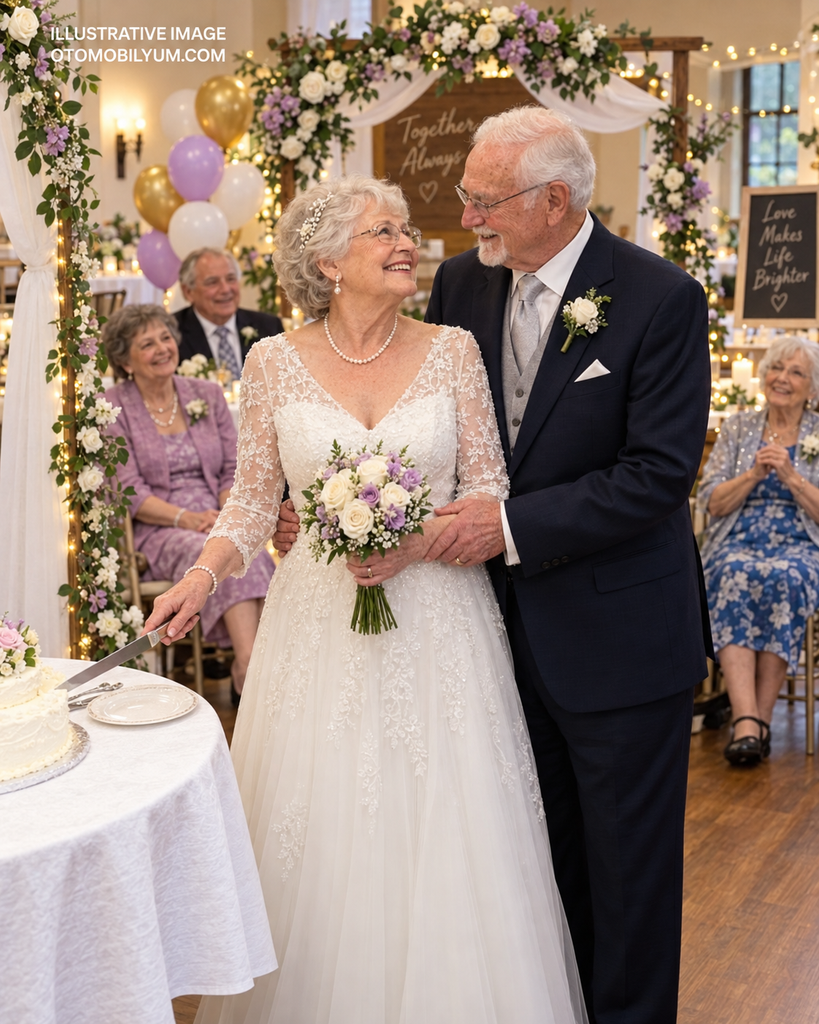
We married three days later.
It was a tiny ceremony in his suite.
A chaplain officiated.
His longtime lawyer, Mr. Vance, acted as witness.
That same afternoon, Arthur signed the healthcare directive naming me his medical agent.
Everything was witnessed and documented.
Evelyn appeared at the doorway just as we finished signing.
She watched quietly.
Then left before I could speak to her.
The following week, Gregory returned with his lawyers.
Mr. Vance met them at the door.
“You’re too late.”
Gregory frowned.
“What?”
“Arthur signed a legally valid healthcare directive naming his wife as his medical agent while fully competent.”
Gregory’s face turned red.
“That changes nothing.”
“It changes everything.”
There was little they could do.
Gregory stormed down the corridor shouting about lawsuits.
Arthur lay back against his pillow and smiled.
“Now they can’t decide how I die.”
And they didn’t.
What began as an arrangement slowly became something much more real.
For two years, Arthur and I lived as husband and wife.
I moved into his suite.
We read together in the evenings.
Played chess when he was strong enough.
Watched the sunset disappear behind the oak tree.
He never made me feel poor.
I never made him feel like a dying rich man.
We were simply two old people who had somehow found each other late.
During his final months, I stayed beside him constantly.
Then one quiet evening, Arthur died holding my hand.
I thought that was the end of the storm.
I was wrong.
A week after the funeral, Mr. Vance came to see me.
He carried a thick manila envelope.
His expression made me nervous.
He placed it on the table.
“Please sit down.”
I did.
“I represented Arthur for more than thirty years,” he said. “There were things he trusted me to keep secret.”
I touched the envelope.
“Arthur is gone. Whatever is inside can’t hurt me now.”
Mr. Vance looked at me sadly.
“That’s where you may be mistaken.”
My stomach tightened.
He slid the documents toward me.
“This could change how you understand the last two years.”
I looked at the legal language.
“I don’t understand any of this.”
Mr. Vance folded his hands.
“Arthur didn’t just have investments and savings.”
He paused.
“He owned this nursing home.”
I stared at him.
“What?”
“The entire facility.”
“The building?”
“Yes.”
“The land?”
“Yes.”
I laughed nervously.
“That’s impossible. Arthur lived here.”
“He purchased it eleven years ago.”
My mouth went dry.
“Why didn’t anyone know?”
“He didn’t want staff or residents treating him differently.”
Mr. Vance looked toward the courtyard.
“And he wanted to see who treated people with kindness when they believed there was nothing to gain.”
I looked back at the paperwork.
“Why are you telling me this?”
“Because Arthur placed the facility into a trust.”
He took a breath.
“And you are the sole beneficiary.”
I could only stare.
“No.”
“Yes.”
“I’m a pensioner.”
“That doesn’t matter.”
“I lived in the state wing.”
“I know.”
“Arthur left me the entire place?”
A voice came from the doorway.
“He noticed you long before he introduced himself.”
I turned.
Evelyn was standing there.
“What are you doing here?”
“I came to tell you the truth.”
She stepped inside.
“I owe you that.”
I looked between her and Mr. Vance.
“What truth?”
Evelyn closed the door.
“My father knew Gregory was planning something.”
“What?”
She hesitated.
“Gregory wanted to demolish the state-funded wing.”
I felt cold.
“Why?”
“Luxury condominiums.”
I stared at her.
“He had investors. Architects. Plans.”
“All those residents…”
“He was going to evict them.”
I covered my mouth.
“Where would they go?”
“He didn’t care.”
Evelyn looked ashamed.
“My father found out.”
Mr. Vance nodded.
“If Arthur had simply left you the property in an ordinary will, Gregory could have challenged it.”
“Tied it up in court?”
“For years.”
“So Arthur created the trust?”
“Yes.”
“To keep Gregory away from it.”
“Yes.”
I looked down at the papers.
“I thought I was protecting him.”
Evelyn’s eyes filled with tears.
“You were.”
She took my hand.
“And he was protecting you too.”
“And everyone in that wing.”
I looked at Evelyn.
“Why did you help him?”
She lowered her eyes.
“Because I was ashamed.”
“Of Gregory?”
“Of myself.”
Her voice shook.
“For years, I watched my brother bully our father.”
“I stayed quiet.”
“I told myself it wasn’t my problem.”
Then she looked at me.
“But when I learned he planned to throw hundreds of elderly people out of their homes just to build luxury apartments…”
She shook her head.
“I couldn’t stay silent anymore.”
Mr. Vance closed the folder.
“Everything Arthur controlled through the trust now belongs to you to protect.”
I laughed softly.
“I’m a poor old woman.”
“Not anymore.”
“That isn’t what I mean.”
I looked at him.
“Gregory has lawyers. Money. Connections.”
Mr. Vance smiled.
“You have the law.”
Then Evelyn squeezed my hand.
“And you have us.”
Something inside me changed.
Because I knew Gregory would come.
And when he did, I would be ready.
He arrived sooner than expected.
The penthouse doors flew open.
Gregory marched inside with two lawyers behind him.
He threw an eviction notice onto the table.
“Pack your things.”
I didn’t move.
He pointed at me.
“As eldest son, the estate reverts to me. This suite belongs to the family.”
Beside me, Mr. Vance calmly opened his briefcase.
Evelyn stepped in from the balcony.
“Sit down, Gregory.”
He turned sharply.
“I don’t take orders from you.”
I slid a document across the table.
“Then read.”
He grabbed it.
His eyes moved quickly across the page.
Then stopped.
All the color disappeared from his face.
“This is fake.”
Mr. Vance shook his head.
“It’s valid.”
“My father wouldn’t do this.”
“Your father owned the entire facility.”
Gregory looked up.
“What?”
“And his trust names his widow as sole beneficiary.”
Gregory stared at me.
“You manipulated him.”
“No,” Evelyn said.
He turned toward her.
“I helped him.”
Gregory’s expression changed.
“You?”
“I signed as a witness.”
“You went behind my back.”
Evelyn stepped closer.
“Someone had to.”
His lawyers exchanged uncomfortable looks.
Mr. Vance closed his briefcase.
“Your claim has no legal basis.”
Gregory looked around as though someone might save him.
No one did.
“You’ll regret this.”
I smiled.
“I doubt it.”
He left.
Without another word.
Several weeks later, I stood near the courtyard window.
Workers were repairing the old state-funded wing.
New heating.
Fresh paint.
Better windows.
Proper beds.
The rooms where I had once shivered were finally warm.
No one was being evicted.
No luxury condominiums were coming.
I looked toward the old oak tree.
The chess table was still there.
For a moment, I could almost see Arthur sitting across from me.
Waiting for my move.
I smiled.
“Your home is safe.”
Then I corrected myself.
“Our home.”
For the first time in years, I truly meant it.