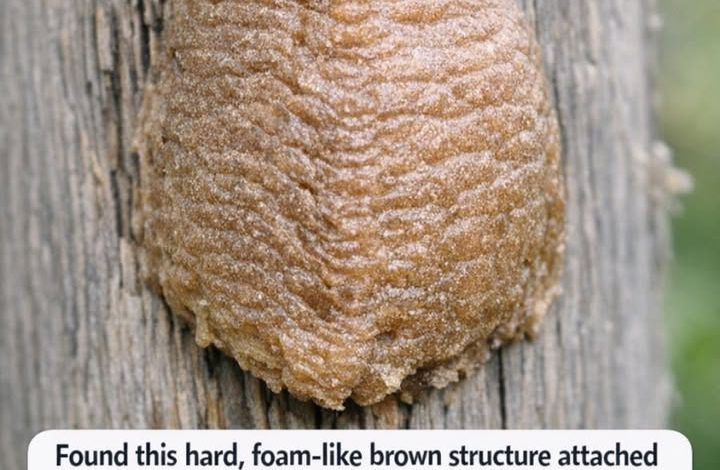
Found this hard, foam-like brown structure attached to a fence post in the backyard. I was about to scrape it off but hesitated. What is it?
Finding a strange, foam-like brown lump on a fence post or tree branch can be surprising. It might make you pause, unsure whether to remove it or leave it alone. Before doing anything, it helps to know you’ve likely come across one of nature’s most fascinating “nurseries.”
What you’re seeing is most likely the egg case of a praying mantis, known scientifically as an ootheca. This structure plays an essential role in the mantis life cycle, and spotting one is actually a positive sign for your garden.
1. The Curious “Brown Blob”
A mantis egg case often catches people off guard because of its unusual look. It’s typically tan or light brown and has a texture similar to hardened foam or dried insulation. Because of this, it’s often mistaken for a wasp nest or even a type of fungus.
These cases are usually about 1–2 inches long. The female mantis creates this foamy casing to shield her eggs from winter cold and predators. It’s a clever natural design that keeps the developing insects safe until warmer weather arrives.
2. A Beneficial Garden Hunter
Praying mantises are extremely helpful insects to have around. Known for their long bodies and “praying” front legs, they are actually skilled hunters.
They are considered beneficial predators because they feed on common garden pests like flies, moths, crickets, and caterpillars. By controlling these populations, they act as a natural form of pest control. Finding an egg case means your garden may soon have its own team of tiny protectors.
3. How the Egg Case Forms
The creation of an ootheca is quite remarkable. In late summer or fall, the female produces a frothy liquid. As she lays her eggs, she surrounds them with this foam, which quickly hardens when exposed to air.
The outside often has ridges, and inside are hundreds of small compartments. Each one contains an egg, protected from cold temperatures and moisture.
4. Where They Are Commonly Found
Mantis egg cases aren’t limited to fence posts. Females carefully choose safe, strategic spots such as:
- Dense shrubs or hedges
- Strong stems of tall plants or weeds
- Under garden furniture or along wooden rails
These locations offer protection from predators while keeping the young close to potential food sources after hatching.
5. Why You Should Leave It Alone
Although it might be tempting to remove it, it’s best to leave the egg case undisturbed. It poses no threat to people, pets, or structures. It won’t damage wood or attract harmful insects.
Removing it can destroy the many developing mantises inside. Leaving it in place supports the ecosystem and helps maintain a healthy garden balance.
6. A Future Swarm of Hunters
Inside one egg case, there can be anywhere from 100 to 400 eggs. They remain dormant through winter. As temperatures rise in spring, development resumes.
When they hatch, the tiny nymphs emerge all at once. They resemble miniature adults and immediately begin searching for food, spreading throughout the garden.
7. The Spring Hatch
Watching a mantis egg case hatch is an incredible experience. It typically occurs in mid to late spring, aligning with the appearance of other insects for food.
Dozens of tiny, pale nymphs will emerge from the case. They quickly darken and disperse into surrounding plants.
8. Moving the Egg Case Safely
If the egg case is in an inconvenient spot, it can be relocated carefully. Gently remove it using a tool, or cut the twig it’s attached to.
Place it in a sheltered area like a shrub, and secure it with string or wire. Keep its original orientation (top facing up) to avoid harming the developing insects.
9. Telling It Apart from Other Objects
It’s easy to confuse an ootheca with other natural structures:
- Wasp nests are gray, papery, and have visible openings
- Fungus tends to be softer or moist and lacks structure
- Mantis egg cases are firm, foam-like, tan or brown, and have ridges
10. A Lesson from Nature
Finding one of these egg cases is a chance to observe nature up close. Instead of seeing it as strange, think of it as a small, hidden part of the natural world unfolding before you.
Watching it over time can be rewarding and offers a simple way to connect with seasonal changes and the life around you.