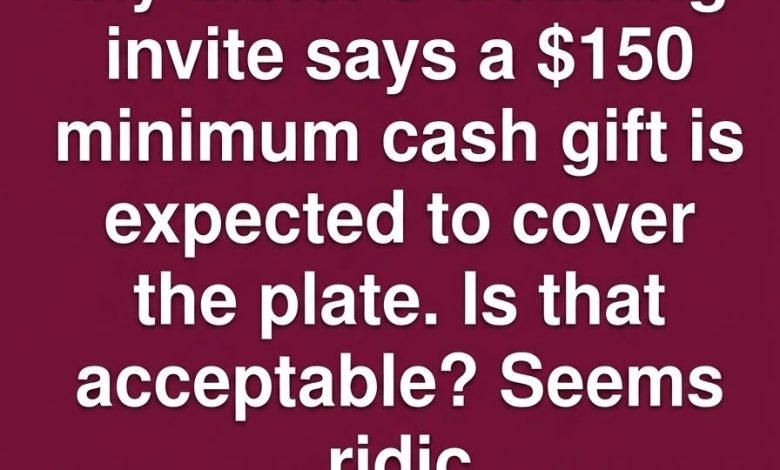
My sister sent out wedding invites with a note saying a minimum cash gift of $150 is expected to cover the cost of our plate. Is it acceptable to mandate a specific gift amount?
💍 Wedding Gift Etiquette: Is It Appropriate to Ask Guests for a Minimum Cash Gift?
Weddings bring together love, family traditions, and practical financial considerations. Because celebrations can be expensive, some guests are surprised to receive invitations that include messages such as, “We kindly request a minimum contribution of $150 to help cover the cost of your meal.” Wording like this often sparks debate about wedding etiquette, gift expectations, and the purpose of celebrating with loved ones.
The discussion isn’t simply about the dollar amount—it raises a broader question: should attending a wedding come with a financial expectation, and how does that affect the spirit of the occasion?
1. The Short Answer
In most cases, no. Traditional etiquette considers it inappropriate to require guests to provide a gift or cash contribution of a specific value.
Wedding gifts are generally:
- Given voluntarily and within each guest’s financial means.
- Influenced by the relationship between the guest and the couple.
- Offered as a thoughtful gesture rather than a required obligation.
A wedding invitation is intended to invite people to celebrate an important milestone, not to ask them to pay for attending.
2. Why Minimum Gift Requests Can Feel Uncomfortable
- They can make the celebration seem transactional, as though guests are paying an admission fee.
- They may place unnecessary financial pressure on friends and family with different budgets.
- They shift attention away from celebrating the marriage and toward covering event costs.
- They can leave some guests feeling uncomfortable, excluded, or judged if they cannot meet the requested amount.
3. The “Cover Your Plate” Mindset
Many couples recognize how costly weddings have become and may hope that gifts help offset some of the expenses. While that perspective is understandable, traditional etiquette does not view wedding gifts as reimbursement for hosting the event. Gifts are intended to express affection, support, and congratulations—not to repay the cost of the celebration.
4. Better Ways to Communicate Gift Preferences
✔ Skip mentioning gifts altogether and allow guests to choose what feels appropriate.
✔ If you prefer monetary gifts, use warm and considerate wording such as:
“Your presence is the greatest gift we could receive. If you wish to honor us with a gift, a monetary contribution would be sincerely appreciated.”
✔ Consider providing a gift registry or wishing well so guests have optional ways to celebrate your new chapter.
5. Thoughtful Approaches for Couples
- Decide whether your priority is receiving gifts, cash contributions, or simply celebrating with loved ones.
- Remember that many guests may already be paying for travel, accommodations, childcare, or special attire.
- Present gift options as invitations rather than expectations.
- Use gracious language, for example:
“Having you celebrate with us is the greatest gift of all. If you choose to give a gift, a contribution toward our future together would be deeply appreciated but is completely optional.”
- Keep your message consistent across invitations, wedding websites, and conversations.
- Express genuine gratitude for every guest, regardless of whether they bring a gift.
6. Advice for Guests
If you receive an invitation requesting a specific monetary amount:
- Give only what fits comfortably within your budget.
- Remember that attending the wedding may already involve significant personal expenses.
- Focus on celebrating the couple rather than feeling obligated to meet a requested amount.
7. The Bigger Picture
Although weddings often require a substantial financial investment, good etiquette encourages maintaining healthy boundaries between hosting and gift-giving. At its heart, a wedding is about bringing together family and friends to celebrate a meaningful life event—not charging admission to participate.
🎯 Final Thoughts
Requiring guests to provide a minimum cash gift is generally considered poor etiquette because it can create unnecessary pressure, awkwardness, and strain on relationships.
A more considerate approach is to:
- Keep gifts entirely voluntary.
- Express gratitude instead of setting expectations.
- Allow each guest to contribute according to their own circumstances.
Ultimately, a wedding invitation should make guests feel warmly welcomed to share in a joyful occasion—not as though payment is expected in exchange for attending.